Limitations
Dependence on the operator’s network coverage
Limited control over the network and data
Recurring subscription fees per sensor

Discover all our connectivity solutions, compatible with all IoT networks.
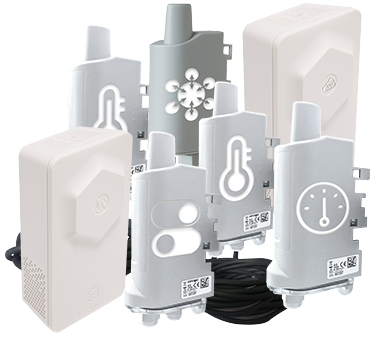
We support you in defining the LoRaWAN (Long Range Wide Area Network) connectivity best suited to your needs, taking into account your use cases, deployment environment and technical constraints.
Thanks to our expertise, you benefit from a reliable and secure connectivity solution tailored to your environment, while maintaining control over your data and your infrastructure.

LoRaWAN is a long-range, low-power IoT connectivity technology, particularly well suited to connected devices. It enables sensors to communicate over long distances while minimising energy consumption, making it an ideal choice for:
Regular data collection using low-power sensors
Large or hard-to-reach areas (buildings, industrial sites, rural environments)
A flexible and secure infrastructure that can be adapted to your needs
LoRaWAN is part of the LPWAN (Low Power Wide Area Network) family, designed for IoT applications that require low data throughput while ensuring wide and reliable coverage.
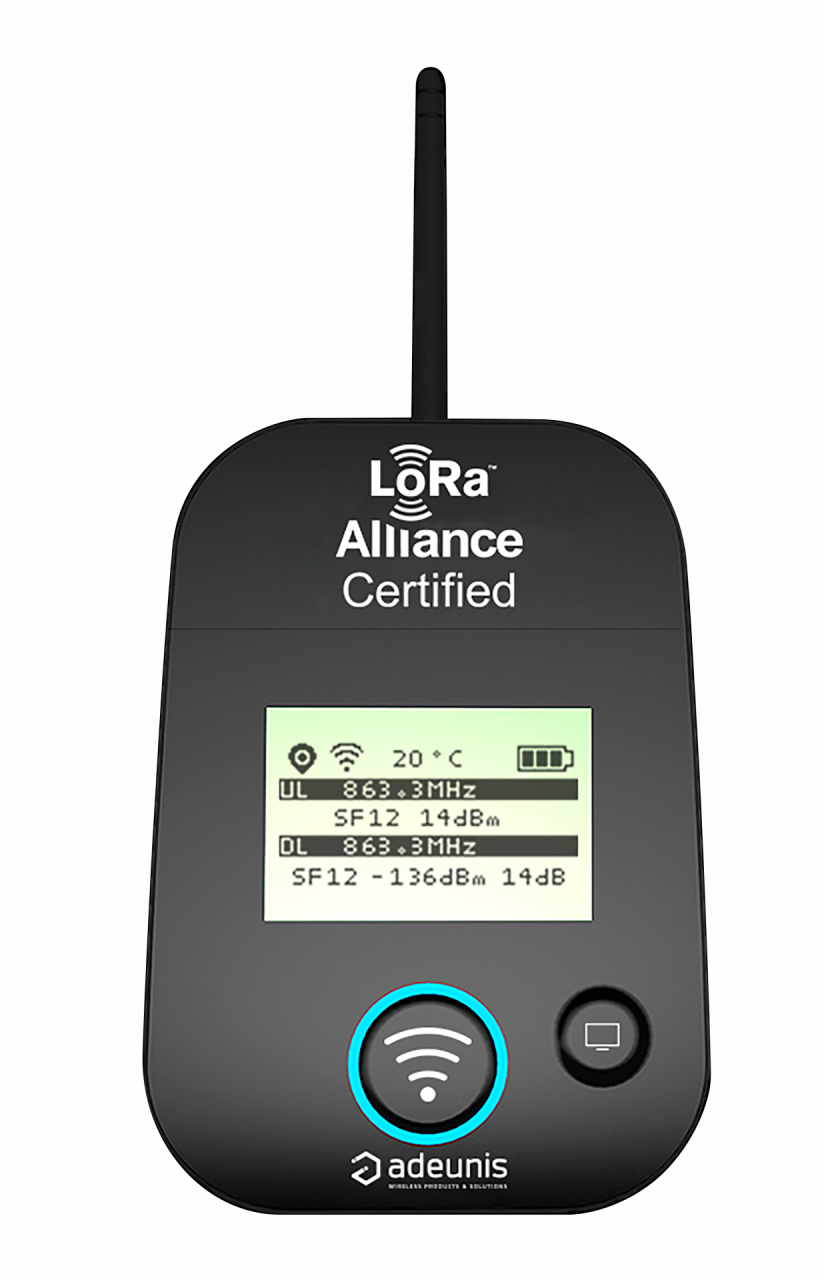
The Field Test Device (FTD) allows you to check and analyse network coverage at a specific location.
It is an essential tool to prepare your IoT project, helping you to:
Verify the availability of a public network where you plan to deploy your sensors
Identify the optimal location for your sensors and gateway when deploying a private or managed private network
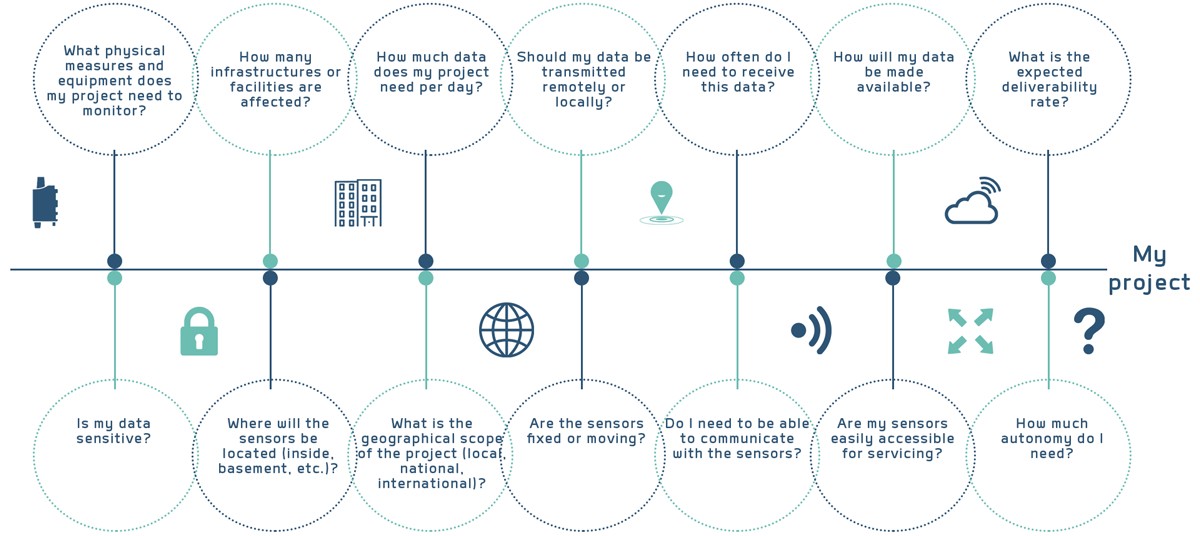
To ensure the success of your project, several factors need to be assessed:
Range and coverage: area to be covered, obstacles and radio environment
Energy consumption: sensor autonomy and data reporting frequency
Security and data privacy: control over data and network protection
Economic model: initial infrastructure investment versus operator subscription costs
Control and customisation: ability to adapt the network to your specific needs
Deployment and maintenance: resources available to manage and operate the network
This analysis helps determine whether a private network, a public network, or a hybrid solution is the most suitable option for your project.
A public or operated LoRaWAN network is deployed and managed by telecom operators.
The infrastructure is shared between users. This type of network offers vast geographical coverage for a large number of sensors.
Benefits
Wide coverage, immediately available
Simplified deployment, with no on-site gateway installation required
Network maintenance handled by the operator
Open standards that promote interoperability
Limitations
Dependence on the operator’s network coverage
Limited control over the network and data
Recurring subscription fees per sensor
A LoRaWAN private network is a network deployed locally, generally on a specific site (such as a company or municipality). It requires the installation of a dedicated infrastructure (including gateways and servers) belonging to the project owner.
Benefits
Full control over network management and data security
No subscription fees once the infrastructure is installed
Predictable coverage, optimised according to your needs
Ability to configure the network according to your own parameters
Limitations
Initial investment required for gateways and servers
Maintenance and monitoring are the responsibility of the organisation
Coverage limited to the installed area
A private operated network combines the autonomy and security of a private network with operation and maintenance handled by a service provider.
This option allows you to benefit from a dedicated infrastructure without the burden of day-to-day network management.
Benefits:
Control over configuration and security, as with a private network
Maintenance, monitoring and updates handled by the operator
Optimised and scalable coverage according to your needs
Faster deployment than a traditional private network
Limitations:
Initial investment often higher than a public network
Partial dependence on the operator for operational management
Coverage limited to the installed area
In addition to providing LoRaWAN sensors and the network tester, Adeunis supports you at every stage of your project:

Public network

Private network
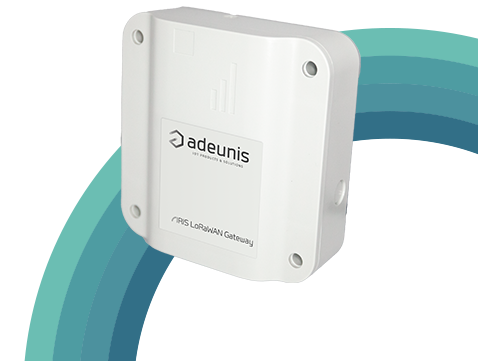
The LoRaWAN IRIS gateway is the heart of your network architecture. Robust and easy to deploy, it is designed to connect your IoT sensors to your IT or cloud platforms.
IRIS combines compactness, radio performance, and ease of use to simplify the integration of your LoRaWAN sensors into your IoT architecture.
Subscribe to our newsletter!
Your e-mail address is only used to send you our newsletter and information about our company. You can unsubscribe at any time using the link included in each email.