
IoT: Energy Management and Consumption Optimisation in Hospitals
Discover how Clermont-Ferrand University Hospital monitors and optimises its energy consumption with high-performance, easy-to-deploy IoT.

Improve occupant comfort and optimise building energy performance through continuous monitoring of indoor temperature and humidity.
Thermal comfort has become a key factor in building operation, both for occupants and facility managers.
It directly impacts quality of life, but also overall building energy performance and the efficiency of technical systems.
In many cases, the lack of accurate temperature and humidity monitoring leads to invisible but costly deviations in building operation.
Thermal comfort monitoring is part of a broader approach to improving occupant comfort in buildings.
Without proper temperature and humidity monitoring, several issues may occur.
Thermal discomfort
Temperature fluctuations leading to occupant complaints and reduced comfort levels.

Excess humidity
Risk of mould growth and degradation of building materials.

Dry indoor air
Impact on perceived comfort and overall indoor environmental quality.

Energy overconsumption
Inefficient heating or cooling regulation leading to unnecessary energy use.
Thermal comfort monitoring is relevant across all building types:

Residential buildings (multi-family housing)

Commercial & office buildings

Healthcare facilities (hospitals, clinics)

Educational buildings (schools, universities…)

Public buildings

Multi-site property portfolios
Thermal comfort monitoring relies on a few key indicators to accurately understand indoor conditions:
These metrics help quickly identify imbalances and anticipate operational issues.

Thermal comfort monitoring is based on a simple data collection and analysis chain, enabling a clear understanding of real building conditions and effective action.


Temperature and humidity sensors continuously measure indoor conditions to reflect real building behaviour.
Data is transmitted regularly to ensure a reliable and continuous view of thermal comfort.

Data from multiple sensors is aggregated into a single platform for easier analysis.
This provides a unified and consistent view of the building or entire property portfolio.

Data analysis identifies abnormal temperature and humidity variations as well as discomfort situations.
Deviations can be detected automatically or through trend analysis over time.

Collected insights are used to adjust technical systems and improve indoor comfort conditions.
This helps optimise energy consumption and enhance long-term building performance.
Thermal comfort monitoring requires reliable solutions capable of operating in diverse environments and scaling across large deployments.
IoT technologies now enable efficient supervision of multiple buildings while ensuring continuous and standardised data collection.
In residential and large-scale property management projects, ease of deployment and cost control are key factors.
COMFORT is designed to meet thermal comfort monitoring needs in buildings, with a focus on simplicity, reliability, and large-scale deployment capability.

Reliable temperature and humidity measurement

Continuous monitoring of indoor comfort conditions

Fast deployment across large property portfolios

Simplified management of existing buildings
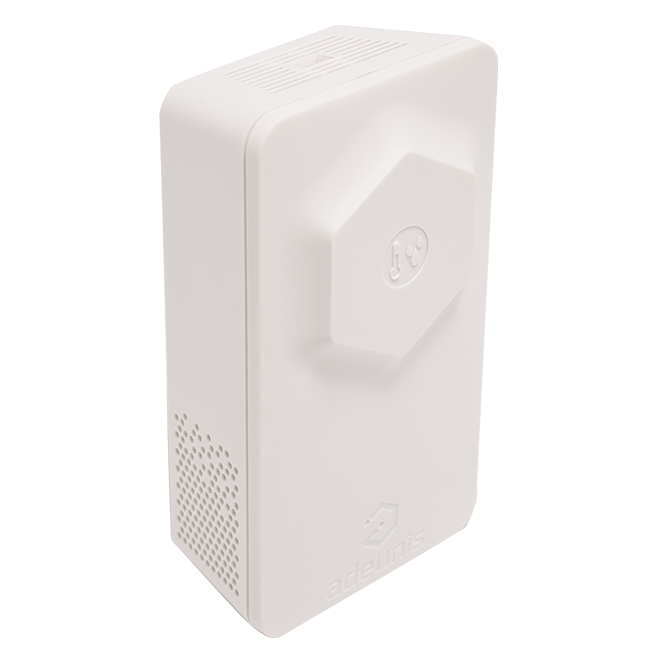
Continuous monitoring of temperature and humidity helps better understand real indoor comfort conditions, enabling faster action to maintain a stable and pleasant environment.
Better visibility of thermal conditions allows more efficient heating and cooling control, reducing unnecessary energy use and improving overall efficiency.
Thermal comfort monitoring provides a continuous and objective view of building conditions, helping technical teams detect issues early and prioritise maintenance.
Extreme temperature or humidity variations can damage building materials over time. Continuous monitoring helps reduce these risks and extend asset lifespan.
For large property portfolios, monitoring provides a unified view of building performance, enabling benchmarking, anomaly detection, and global optimisation.
Thermal comfort refers to the sense of well-being experienced by occupants in relation to the temperature and humidity of their indoor environment.
A building is considered thermally comfortable when indoor conditions allow occupants to carry out their activities without feeling excessive cold, heat, or humidity-related discomfort.
Thermal comfort is typically assessed through continuous monitoring of indoor temperature and humidity.
These data points are collected using connected sensors installed within monitored spaces, then analysed to identify deviations, trends, and discomfort situations.
Excess humidity can lead to mould growth, material degradation, and a decline in indoor air quality.
Over time, it can also increase maintenance costs and negatively impact occupant comfort and building durability.
Connected temperature and humidity sensors are the most widely used solution.
When combined with IoT networks such as LoRaWAN, NB-IoT, or LTE-M, they enable remote building monitoring and large-scale deployment across property portfolios.
Monitoring temperature and humidity provides a clear understanding of real indoor conditions.
It helps facility managers detect comfort issues early, optimise HVAC system operation, reduce energy consumption, and improve overall building performance.
Thermal comfort monitoring is relevant across a wide range of environments, including:
It enables a consistent and unified view of comfort conditions across entire building fleets.
Temperature and humidity data allow for more precise control of heating, ventilation, and air conditioning systems.
This improved understanding of real building conditions helps reduce unnecessary energy consumption and enhances overall energy efficiency.
Thermal comfort is primarily related to temperature and humidity perceived by occupants.
Indoor air quality, on the other hand, involves additional parameters such as CO₂ levels, volatile organic compounds (VOCs), and particulate matter.
These two concepts are complementary and together contribute to overall occupant well-being in buildings.
Discover how building operators, social housing providers, and facility managers use temperature and humidity data to better understand building behaviour, improve occupant comfort, and optimise operations.
Discover how Clermont-Ferrand University Hospital monitors and optimises its energy consumption with high-performance, easy-to-deploy IoT.

Veolia Energy & Decarbonisation deploys 5,000 IoT sensors to ensure reliable monitoring and improve energy performance.
Discover how Val Touraine Habitat enhances boiler room monitoring with IoT: leak detection, energy management, and improved comfort.

PROCHALOR, SEMCRA and Adeunis optimise energy and thermal comfort in collective housing.

Find out how Berger-Levrault is using IoT to reduce energy consumption and improve employee comfort.
Thermal comfort is only one lever of building performance. Indoor air quality, energy efficiency, and building maintenance also play a key role in improving operations and occupant well-being.

Monitor CO₂, VOCs, and particulate matter to improve indoor environmental conditions.

Analyse energy consumption and identify optimisation opportunities using field data.
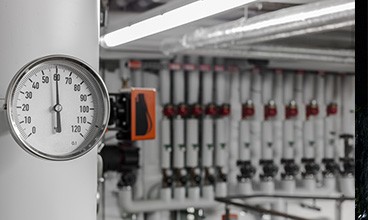
Detect system anomalies earlier and improve maintenance operations across building equipment.
Our team is here to help you. If you have any questions or encounter any problems when using our application, please don’t hesitate to contact us. We’re here to solve any problems you may encounter and provide you with the best possible experience.
Subscribe to our newsletter!
Your e-mail address is only used to send you our newsletter and information about our company. You can unsubscribe at any time using the link included in each email.