Le partenaire pour la captation, transmission et mise à disposition de vos données
Deploying an IoT project may seem straightforward on paper: install sensors, position a gateway, connect everything to the LoRaWAN network… and wait for the data.
In reality, things are rarely that simple. Structural walls, metal frameworks, technical areas or specific building layouts can make network coverage unpredictable. The result? IoT sensors that fail to transmit data, poorly covered areas, and teams forced to return on-site to fix the installation.
This is precisely where IoT radio mapping comes into play. Also known as a LoRaWAN coverage study, it is an essential step that is still too often overlooked.
Understanding IoT radio mapping: a field-first approach
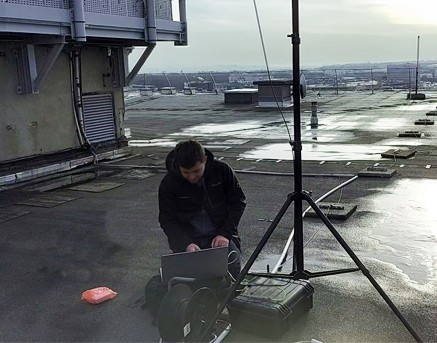
Radio mapping consists of analysing the actual network quality directly on site, both before and during the deployment of an IoT project.
Unlike a purely theoretical approach, this step confronts the project with real-world conditions: where IoT sensors will be installed, where obstacles exist, and where the LoRaWAN network must operate reliably.
The objective is simple: to ensure that every device will communicate properly once installed. Behind this apparent simplicity lies a major challenge: guaranteeing the overall reliability of the IoT project.
Why radio mapping makes all the difference
What separates a well-managed IoT project from a problematic one often happens before any equipment is even installed.
Without radio mapping, decisions regarding sensors and gateway placement are largely based on assumptions. On-site, these assumptions are frequently put to the test.
Certain areas, such as boiler rooms, technical spaces or storage areas, can significantly attenuate the LoRaWAN signal and lead to communication failures. These constraints only become visible through real on-site testing.
Radio mapping removes this uncertainty. It identifies which areas are truly covered and which are not, allowing the network architecture to be adjusted before deployment even begins.
Beyond the technical aspect, the operational impact is just as important: fewer site visits, fewer unexpected adjustments, and better control over project timelines.
A two-step approach: before and during deployment
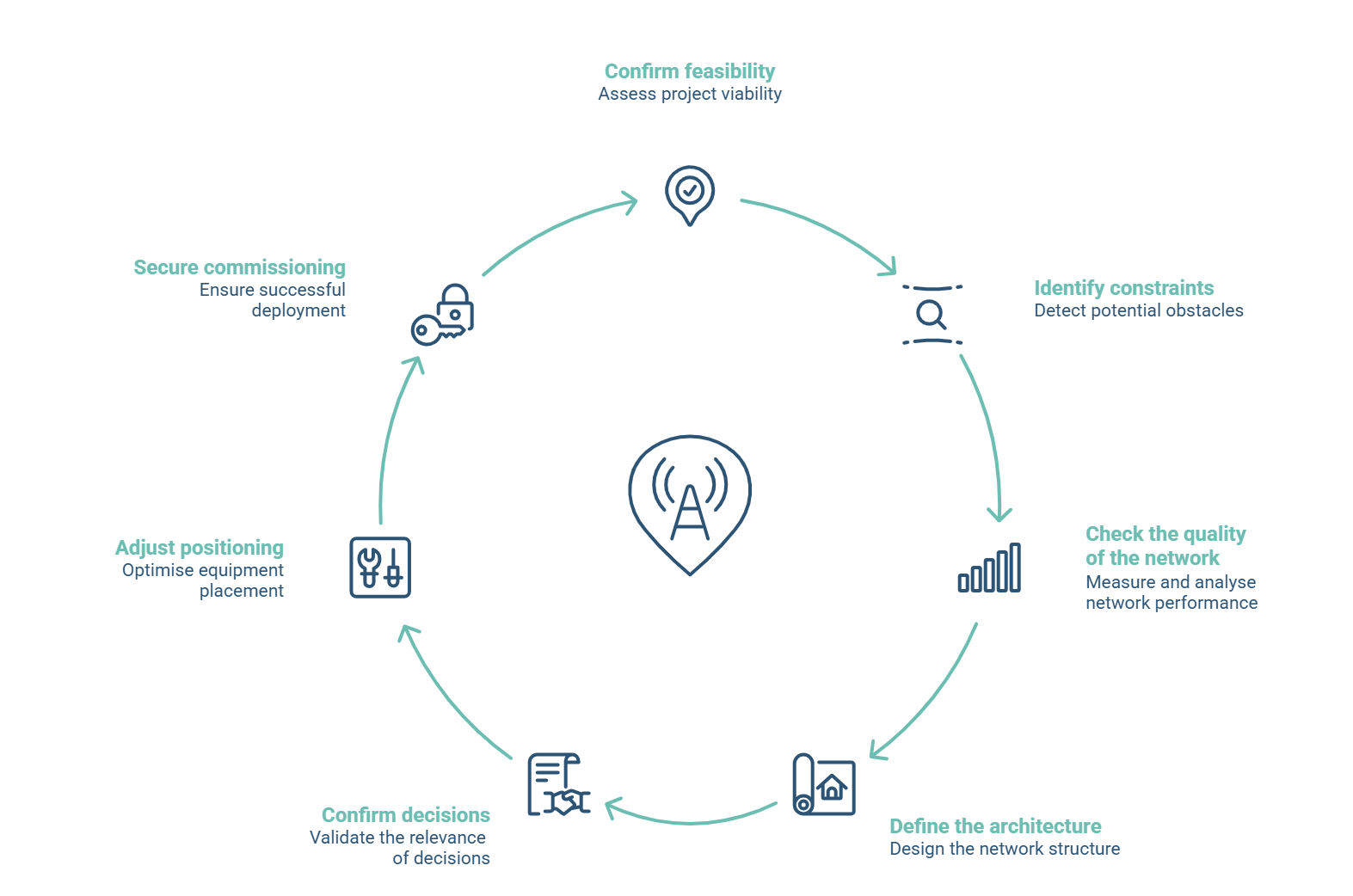
Radio mapping is not limited to an initial check. It supports the project at two key stages:
- Before deployment: validating feasibility, identifying site constraints, assessing LoRaWAN network quality and defining the network architecture.
- During deployment: confirming decisions, fine-tuning equipment positioning and securing commissioning.
This progressive approach is particularly valued by integrators, as it provides both a global vision and the flexibility to adapt on site.
How is an IoT coverage test carried out?
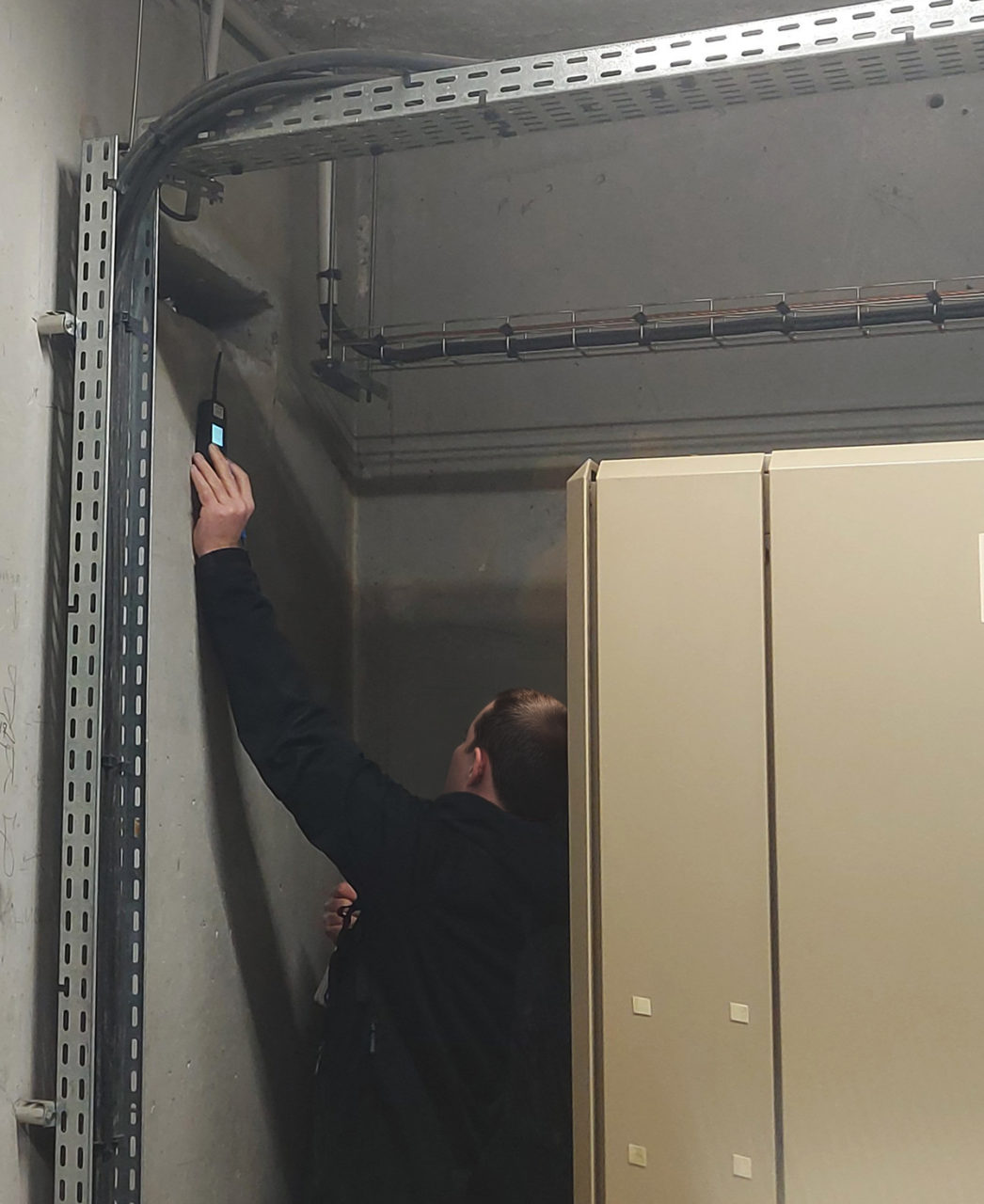
On site, radio mapping follows a structured methodology.
- Dedicated tools, such as the Field Test Device (FTD), are used to analyse LoRaWAN network quality from different points across the site.
- These points correspond to future IoT sensor locations or representative areas of the building.
- At each location, multiple exchanges are performed to verify not only the presence of the LoRaWAN signal, but also its stability over time.
The collected data is used to analyse key indicators such as signal strength, radio noise levels and communication parameters. The goal is to determine whether the LoRaWAN network will be reliable and fully operational once deployment is complete.
This information is then compiled into a radio mapping report, which serves as a basis for making concrete decisions regarding the IoT project.
Real-world example: from field testing to an optimised architecture
Let’s take the example of a 1,000 m² site including offices, meeting rooms, storage areas and a workshop.
Rather than testing every single point, representative locations are selected, including the most challenging areas in terms of radio propagation.
The result:
- A stable and consistent coverage across the entire site.
- Confirmation that a single, properly positioned gateway is sufficient to cover the whole building.
Without radio mapping, this decision would have been risky: either under-dimensioning the IoT network or over-equipping it unnecessarily. Thanks to on-site testing, the gateway placement is optimised and precise recommendations are defined to ensure long-term communication reliability.
Radio mapping and gateway selection: a direct link
Radio mapping is not just a technical step; it directly influences the network architecture.
Based on the results, it becomes possible to determine:
- The number of gateways required
- Their optimal positioning
- The overall architecture to deploy
Whether the site requires one or several gateways, this step ensures the design of an IoT network that is both efficient, reliable and cost-effective.
A key lever for successful IoT deployments
In summary, radio mapping is a true project management tool.
It allows you to anticipate constraints, secure decisions and optimise resources.
For integrators, it is a way to improve efficiency, avoid unexpected issues and reduce corrective interventions. In a context where IoT projects must be reliable, fast to deploy and cost-controlled, this step is essential.
Need support for your coverage tests?
Every site has its own constraints and reacts differently to LoRaWAN radio signals. Adeunis teams can support you in your IoT coverage testing and in defining your network architecture, ensuring a reliable and smooth deployment.